
Well now, pull up a rocking chair and let old Murray tell you something that just about knocked my slippers clean off my feet.
You know how your grandmother used to say, “Get a good night’s sleep and you’ll feel better in the morning”? Turns out Grandma was onto something long before scientists started poking around inside brains with fancy machines and impressive degrees.
Apparently, while you’re sleeping, your brain isn’t just lying around like Uncle Harold after Thanksgiving dinner. No sir. It’s busy doing housekeeping.
That’s right. Your brain spends the night cleaning itself.
Now, before you start imagining tiny janitors running around your head with brooms and dustpans, let me explain.
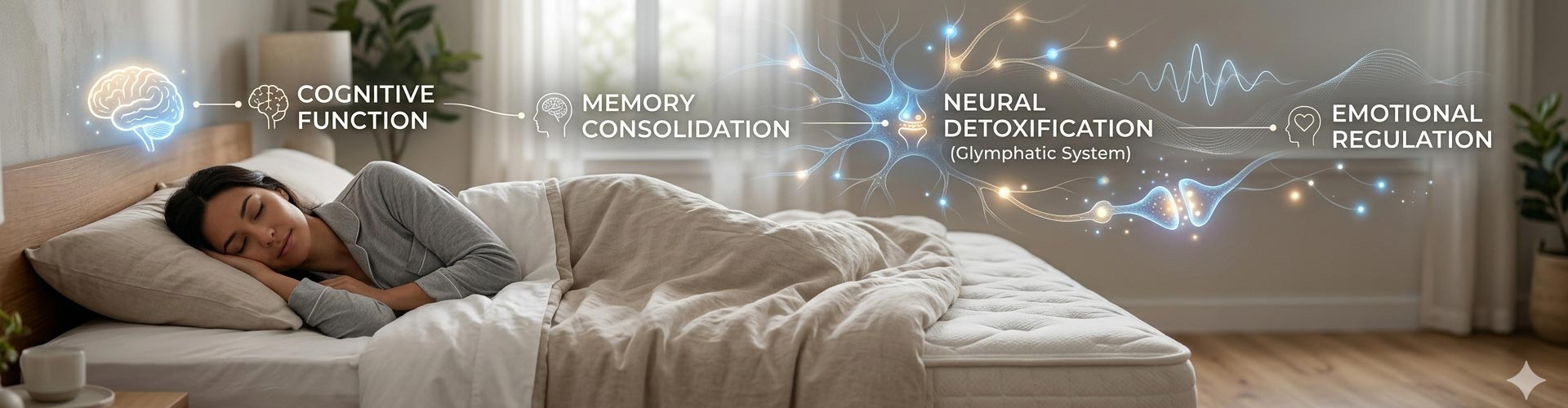
Researchers recently discovered that certain brain activity during sleep helps move fluids through the brain, carrying away waste and debris that build up throughout the day. Think of it as your brain’s overnight cleaning crew. While you’re dreaming about winning the lottery or finding your high school hairline again, your noggin is busy flushing out the junk.
Frankly, I find that comforting.
Because if my brain wasn’t cleaning itself every night, I’d probably still be trying to remember where I left my reading glasses back in 1997.
The Amazing Night Shift
During the day, your brain is working overtime. It’s helping you make decisions, remember names, solve problems, and figure out why the television remote keeps disappearing between couch cushions.
All that hard work creates waste products. Just like driving a car creates exhaust, thinking creates a bit of biological clutter.
Scientists now believe that while we sleep, rhythmic brain activity helps move cleaning fluids through brain tissue, washing away much of that accumulated debris.
In other words, sleep isn’t laziness.
Sleep is maintenance.
And as someone who’s owned more vehicles than I can count, I can tell you maintenance matters.
Skip enough oil changes and eventually something starts knocking.
The Same Goes for Mattresses
Now, you knew I was going to bring this back to mattresses somehow.
Here’s the thing: if your brain does its best cleaning while you’re sleeping, doesn’t it make sense to give it the best possible environment to do its job?
A lumpy mattress that’s older than your favorite fishing hat isn’t exactly helping matters.
If you’re tossing, turning, waking up sore, or spending half the night trying to find a comfortable position, your sleep quality can suffer. And if your sleep suffers, your body’s nightly maintenance schedule may not be operating at full efficiency.
That’s like hiring a cleaning crew and then shutting off all the lights.
A good mattress helps support restful, uninterrupted sleep. It won’t do your brain’s cleaning for it, but it can certainly help you stay asleep long enough for your body to do what it was designed to do.
A Murray-Sized Conclusion
The older I get, the more I appreciate a good night’s sleep. When I was twenty, I could sleep on a pile of garden hoses and wake up feeling fantastic.
Today, if my pillow is positioned three degrees too far to the left, I’ll spend the morning walking around like a rusty lawn ornament.
Science keeps teaching us that sleep is one of the most important things we can do for our health. It’s not wasted time. It’s repair time. Recharge time. Cleanup time.
So tonight, when you climb into bed, remember that your brain is preparing for its overnight cleaning shift.
And if your mattress has more sag than a pair of suspenders from 1954, it might be time to visit us at VermontBedrooms.com and find something worthy of all that important work happening between your ears.
Until next time, sleep well, dream big, and try not to lose your glasses like I do.

0 Comments